
Your credit report plays a vital role in your financial life. Lenders, landlords, insurers, and even some employers may review your credit history when making important decisions. Errors, outdated information, or negative items can make it more difficult to qualify for loans, secure favorable interest rates, or access new financial opportunities. Understanding how credit report repair services work can help consumers make informed decisions about improving their credit profile.
Professional credit report repair services focus on reviewing credit reports, identifying potentially inaccurate or unverifiable information, and disputing eligible items with the credit bureaus in accordance with consumer protection laws. While consumers have the legal right to dispute errors on their own, many choose professional assistance for guidance, organization, and ongoing monitoring throughout the process. Reputable providers typically combine credit analysis, educational resources, progress tracking, and dispute management to help clients better understand and improve their financial standing.
What Are Credit Report Repair Services?
Credit report repair services assist consumers in reviewing their credit reports and addressing information that may be inaccurate, incomplete, outdated, or unverifiable.
These services commonly include:
Credit report analysis
Identification of reporting errors
Dispute preparation
Credit education
Credit monitoring recommendations
Progress tracking
The objective is to help ensure that credit reports accurately reflect a consumer's financial history while encouraging responsible long-term credit management.
Why Credit Reports Matter
A credit report influences many financial decisions.
It may affect:
Mortgage approvals
Auto loan eligibility
Credit card applications
Apartment rentals
Insurance premiums
Employment screenings in certain industries
Maintaining an accurate credit report can improve access to financial opportunities and reduce borrowing costs.
Common Credit Report Errors
Although credit reporting systems are highly regulated, inaccuracies can still occur.
Examples include:
Incorrect personal information
Duplicate accounts
Accounts that do not belong to you
Incorrect payment history
Outdated collection accounts
Incorrect account balances
Fraud resulting from identity theft
Reviewing your credit reports regularly can help identify these issues before they create larger financial problems.
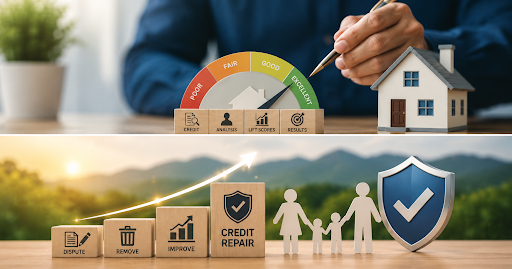
How the Credit Repair Process Works
The repair process generally follows several important steps.
Review Credit Reports
The first step is obtaining reports from the major credit reporting agencies and reviewing every account carefully.
Identify Potential Errors
Consumers or service providers examine the report for information that appears inaccurate or cannot be verified.
Submit Disputes
If appropriate, disputes are submitted to the credit bureaus requesting investigation of questionable items.
Monitor Progress
Consumers track investigation results and continue monitoring their reports for updates.
Professional services often provide online dashboards, educational resources, and ongoing status updates throughout the process.
Healthy Credit Habits That Support Better Scores
Credit repair works best when combined with responsible financial habits.
Important practices include:
Paying bills on time
Keeping credit utilization low
Avoiding unnecessary credit applications
Maintaining older credit accounts when appropriate
Monitoring reports regularly
Managing debt responsibly
These habits contribute to long-term credit improvement regardless of whether professional assistance is used.
When Professional Assistance May Be Helpful
Some consumers choose professional services when facing complex credit situations.
Examples include:
Multiple reporting errors
Identity theft concerns
Numerous collection accounts
Limited understanding of dispute procedures
Need for organized credit monitoring
Professional guidance may simplify the process while helping consumers better understand their credit reports.
Building Strong Business Credit
Good personal credit is important for entrepreneurs, but establishing separate business credit can also provide valuable financial opportunities.
A business credit building program typically focuses on:
Establishing a business credit profile
Improving business creditworthiness
Preparing businesses for financing opportunities
Building vendor relationships
Strengthening overall business credibility
Some programs also provide financing guidance, business credit education, and tools designed to help companies qualify for financing under the business's name rather than relying solely on personal credit.
Choosing a Credit Repair Service
Before selecting a provider, consumers should evaluate:
Transparency of services
Educational support
Credit monitoring options
Communication throughout the process
Compliance with applicable consumer protection laws
Realistic expectations regarding results
Legitimate providers explain that accurate negative information generally cannot be removed simply because it is unfavorable.
Conclusion
Credit report repair services can help consumers better understand their credit reports, identify potential inaccuracies, and navigate the dispute process while encouraging responsible financial habits. Combined with consistent on-time payments, careful debt management, and regular credit monitoring, these services may contribute to stronger long-term financial health. For entrepreneurs looking to strengthen both personal and commercial financial opportunities, a business credit building program can be an effective step toward establishing a stronger business credit profile and expanding future financing options. Regardless of whether consumers choose professional assistance or manage disputes independently, maintaining accurate credit information remains an essential part of financial success.







.png)
Write a comment ...